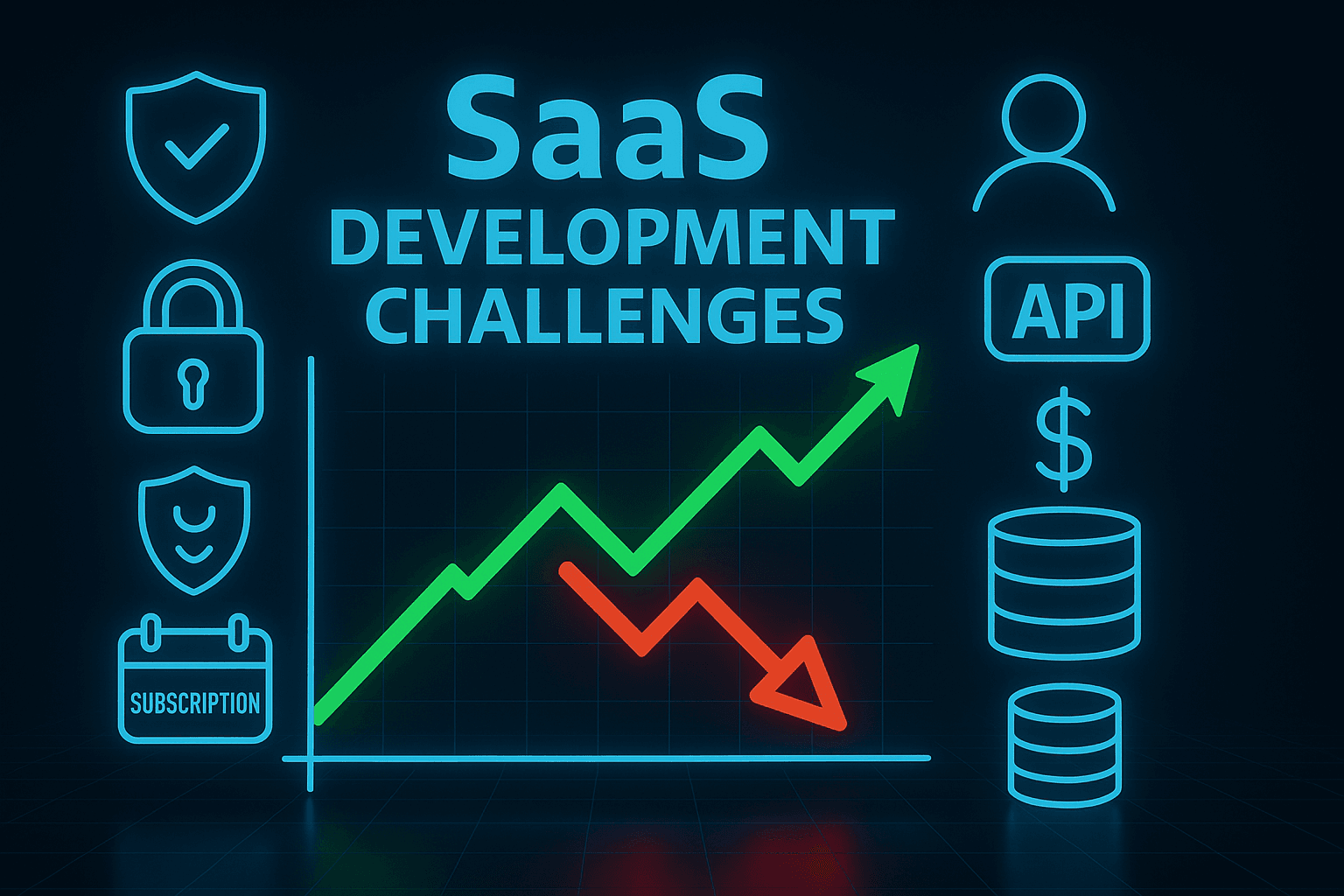
Scalability: Use microservices and cloud platforms to handle growth efficiently.
Data Security: Implement encryption, automate compliance, and use real-time monitoring.
API Integration: Set up API gateways, manage event-driven systems, and test thoroughly.
Subscription Systems: Optimize billing, manage feature access, and focus on retention.
Continuous Deployment: Use blue-green deployments, gradual releases, and quick recovery methods.
Quick Comparison of Challenges and Solutions
Challenge
Solution
Impact
Scalability
Microservices, cloud platforms
Supports system expansion
Data Security
Encryption, compliance automation
Strengthens data protection
API Integration
API gateway, event-driven architecture
Enhances responsiveness
Subscription Systems
Billing optimization, retention tools
Boosts revenue and loyalty
Continuous Deployment
Blue-green deployment, feature flags
Ensures smooth updates
SaaS Deep Dive: Designing & Building Multi-Tenant Solutions • Tod Golding • GOTO 2020
1. Building for Scale and Speed
Scaling a SaaS platform effectively requires solid architectural planning. With 73% of large enterprises now using microservices architecture, it's clear that distributed systems designed to handle growing workloads are no longer optional - they're essential.
Horizontal Scaling Methods
Horizontal scaling involves adding more machines to share the workload, which boosts both scalability and fault tolerance. This method minimizes dependence on a single server and ensures workloads are handled efficiently.
Scaling Aspect
Implementation Strategy
Impact
Load Distribution
Load balancers with auto-scaling
Ensures even workload spread
Resource Management
Container orchestration
Enables automated scaling
Fault Tolerance
Multiple server instances
Enhances reliability
Optimizing Database Performance
A well-optimized database is crucial for maintaining speed and reliability under heavy traffic. For example, one production system cut query execution times from 7 seconds to just 200 milliseconds by adding a composite index. Some key database optimization techniques include:
Indexing frequently executed queries to speed up retrieval.
Caching static data to reduce redundant database hits.
Tenant-based sharding for multi-tenant applications to evenly distribute database load.
According to a DZone study, query caching alone reduced database load by 40% during peak usage. These optimizations can make a dramatic difference in overall system performance.
Microservices: A Game Changer
Adopting microservices architecture can lead to measurable improvements. For instance, Westech, a global martech company, reduced feature delivery time from over a year to just a few weeks, cut its physical server count in half, and significantly lowered IT maintenance costs. Similarly, AiBUY, a video commerce platform, transitioned to microservices and saw its release time drop from 40 hours to just 30 minutes, while reducing feature delivery costs by 30%.
"Microservices architecture is vital for DevOps because it promotes faster development cycles, reduces risk, and improves scalability and resilience." – Atlassian
The success of microservices lies in clearly defining service boundaries and aligning teams with specific services. This approach allows businesses to scale individual components independently based on demand, ensuring efficient resource use and maintaining system stability.
These strategies provide a strong framework for tackling the complexities of SaaS development and scaling.
2. Data Security and Compliance Steps
Once system performance is optimized, the next priority is protecting data. Data breaches not only compromise sensitive information but can also lead to severe financial consequences. With 12% of attacks stemming from the software supply chain and 15% involving business partners in 2024, strengthening security measures is essential. Below, we'll explore strategies for encryption, compliance automation, and ongoing security monitoring.
Data Encryption Setup
Modern SaaS applications demand multi-layer encryption to secure sensitive information at every stage. Experts emphasize the importance of encrypting data throughout its entire lifecycle. Here's a breakdown of recommended encryption standards:
Protection Layer
Standard
Implementation
Data at Rest
AES-256
Database and file storage
Data in Transit
TLS 1.2
API communications
Data in Use
SEV
Memory protection
For instance, Box, a leading cloud storage provider, employs AES 256-bit encryption to safeguard stored data and TLS 1.2 to secure data during transmission. This approach ensures data protection across all states - whether at rest, in transit, or in use.
Compliance Automation
Automating compliance processes is a smart way to reduce human error and ensure regulatory adherence. A great example is Capital Rx, which adopted automated PHI detection tools to secure communication channels. Using Nightfall, they achieved HIPAA compliance while enabling safe data sharing.
"We're able to get ahead of very expensive data exposure incidents that could violate HIPAA requirements, which can run easily to thousands of dollars per member record affected."
Ryan Kelly, CTO, Capital Rx
Key elements of compliance automation include:
Policy as Code (PaC): Writing compliance policies as code allows for automatic enforcement and consistent application across systems.
Continuous Monitoring: Tools for real-time monitoring can quickly identify violations, such as GDPR’s 72-hour breach notification requirement.
Automated Assessment Tools: Platforms like OSCAL simplify security assessments and reporting for cloud services.
Security Monitoring Tools
According to a Cloud Security Alliance survey, 70% of organizations now have dedicated SaaS security teams. Effective monitoring requires a combination of tools tailored to different security needs:
Tool Type
Primary Function
Key Benefits
SSPM
Configuration monitoring
Identifies misconfigurations and permission issues
SIEM
Log analysis
Provides real-time threat detection
ITDR
Identity monitoring
Prevents unauthorized access
Continuous third-party monitoring and enforcing least-privilege access are critical for maintaining a secure environment. With 25% of organizations experiencing cloud security incidents in the past two years, investing in tools that deliver actionable insights is more important than ever.
3. API Integration Methods
Once performance and security are addressed, seamless API integration becomes a cornerstone for building a well-connected SaaS ecosystem. APIs enable SaaS platforms to interact with external services, and with an estimated 85% of business applications expected to be SaaS-based by 2025, ensuring reliable integration methods is critical for long-term success.
API Gateway Setup
An API gateway acts as the central hub for managing API traffic. It standardizes interactions, boosts security, and simplifies operations through a range of functionalities.
Gateway Function
Implementation
Business Impact
Authentication
Centralized token management
Reduced security vulnerabilities
Rate Limiting
Request throttling
Maintains service stability
Analytics
Traffic monitoring
Enables data-driven improvements
HTTPS Enforcement
Encrypted communications
Strengthens data protection
A great example of this in action is Kiabi’s API gateway rollout in 2023. By implementing this approach, the company cut its application development timeline by 50% and improved website response times from 3.6 seconds to just 1.2 seconds. This efficiency also helped expand their online operations to 32 countries.
Event System Management
Real-time data flow is a key requirement for distributed systems, making event-driven architectures indispensable. To manage event systems effectively, versioning and compatibility strategies play a pivotal role.
Key practices include:
Version Control: Use URI versioning to clearly distinguish major updates while maintaining backward compatibility.
Change Management: Document all API changes and establish clear deprecation timelines to minimize disruptions.
Monitoring and Analytics: Leverage tools to track uptime, response times, and error rates, ensuring real-time insights into API performance.
Integration Testing
Thorough testing is essential for validating API reliability and performance. Tools like Postman and Katalon Studio are widely used for this purpose, with Postman preferred by 45% of users for endpoint validation and Katalon Studio favored by 37% for its comprehensive testing capabilities.
Monitoring tools also play a crucial role in maintaining API health. Many providers offer pay-as-you-go pricing models, such as Middleware, which charges $0.30 per GB for logs, metrics, and traces, and $5 per 5,000 synthetic checks.
Key features of effective monitoring solutions include:
Real-time performance tracking
Automated error detection
Root cause analysis
Insights into usage patterns
These integration methods not only strengthen the overall SaaS architecture but also ensure a smooth transition to testing and deployment phases. By combining robust gateways, event system management, and thorough testing, SaaS platforms are better equipped to deliver reliable and scalable services.
sbb-itb-2511131
4. Subscription System Setup
A well-designed subscription system is the backbone of recurring revenue for SaaS businesses. It plays a key role in handling billing, managing feature access, and ensuring customer loyalty. As SaaS platforms grow, having a streamlined subscription system becomes essential for both scaling operations and keeping customers happy.
Billing System Setup
A structured billing system is crucial for maximizing revenue. For instance, companies that adjust their pricing biannually see their average revenue per user double. Here are the key components every billing system should address:
Component
Implementation Focus
Impact
Payment Processing
Automated recurring billing
Reduces the risk of failed payments
Usage Tracking
Real-time monitoring
Ensures accurate billing
Tax Management
Compliance across jurisdictions
Meets legal requirements
Invoice Generation
Customizable templates
Creates a professional impression
To ensure flexibility, integrate multiple payment gateways. Some widely used options include:
Once your billing system is optimized, the next step is to manage user access effectively.
Feature Access Control
Controlling access to features based on subscription tiers ensures customers only use what they’ve paid for, while also providing a clear upgrade path. For example, sales teams might get full access to tools, while support teams are limited to read-only permissions. Here’s how to implement effective access control:
Set permissions based on subscription tiers
Use multi-factor authentication for added security
Automate role assignments to streamline user management
These measures not only enhance security but also improve user experience by aligning access with specific roles and needs.
Customer Retention Tools
Customer retention is a game-changer for profitability. Increasing retention by just 5% can boost profits by 25-95%. IBM, for instance, increased retention from 50% to over 70% by introducing detailed onboarding processes and in-app support across 25 products. In another example, using in-app checklists for feature adoption led to 86% of users completing chat widget customization, resulting in a 2-3% revenue increase.
To monitor and improve retention, focus on:
Tracking customer engagement
Analyzing usage patterns
Building churn prediction models
Offering personalized retention incentives
Machine learning can play a big role here. By tailoring retention offers, companies have seen retention rates improve by up to 400 basis points. Regularly analyzing these metrics helps identify customers who might leave, allowing you to act before they churn.
5. Continuous Deployment Methods
Continuous deployment plays a crucial role in maintaining SaaS uptime during updates. By using modern deployment strategies, companies can minimize disruptions while ensuring reliable software delivery. In fact, organizations with integrated continuous deployment pipelines report up to 80% better outcomes in their experimentation efforts.
Blue-Green Deployment Setup
Blue-green deployment is a smart way to update applications with minimal downtime. It works by alternating traffic between two identical environments - one live and one staged. Here's how it typically looks:
Environment
Purpose
Key Benefits
Blue (Current)
Manages active production traffic
Ensures uninterrupted service
Green (Staged)
Hosts the new version for testing
Allows thorough validation and easy rollback
Before redirecting traffic to the green environment, rigorous testing is essential. This method is particularly effective for large-scale deployments, as it offers a clear, auditable process while reducing risks during updates.
To make blue-green deployments successful, consider these steps:
Automate the entire deployment process.
Use Infrastructure as Code (IaC) to manage and replicate environments.
Ensure both environments meet the same security standards.
Implement robust monitoring tools to track performance.
Once the blue-green deployment is complete, gradual release strategies can further reduce risks.
Gradual Release Process
A gradual release strategy allows teams to test updates on a smaller scale before rolling them out to all users. By targeting a limited audience, teams can gather real-world performance data and user feedback. Key metrics like feature adoption, response times, and error rates help assess the update's success.
Facebook provides a great example of this approach. They roll out new features to select user groups first, closely monitoring performance metrics to ensure smooth functionality.
Quick Recovery Steps
To complement gradual releases, quick recovery mechanisms are essential for addressing any issues that arise. These include:
Automated rollback triggers: Continuously monitor metrics and roll back updates when thresholds are breached.
Feature flags: Enable or disable specific features without reversing the entire deployment.
Version control integration: Maintain a detailed deployment history to streamline targeted rollbacks.
For instance, Ariat demonstrates how aligning monitoring systems with financial metrics can help detect and resolve issues proactively, often before customers even notice a problem.
Next Steps
Solution Summary
The SaaS industry is growing at a breakneck pace, which means businesses need solid strategies to tackle common hurdles. Here's a quick look at some challenges and their solutions:
Challenge
Solution
Impact
Scalability
Microservices architecture with cloud platforms
Supports system expansion
Security
Data encryption and compliance automation
Strengthens data protection
Integration
API gateway with event-driven architecture
Enhances responsiveness
Cost Management
Infrastructure optimization
Lowers operational expenses
Performance
Caching and load balancing
Improves user experience
These solutions provide a strong starting point for strategic SaaS development.
Development Guidelines
Building a successful SaaS application isn’t just about solving problems - it’s about creating a roadmap for sustainable growth. Here are the key principles to keep in mind, based on the challenges and solutions outlined above:
Architecture Planning
Design a scalable and cost-efficient architecture that can handle future growth seamlessly.
Security Implementation
Prioritize security by incorporating end-to-end encryption, conducting regular audits, automating compliance processes, and using real-time threat monitoring to stay ahead of risks.
Performance Optimization
Use caching strategies and performance monitoring tools to maintain a smooth user experience. Agile development practices can also help speed up feature rollouts while keeping the system responsive.
Cost Management
Developing a SaaS product can cost anywhere from $25,000 to over $250,000, with annual maintenance costs typically ranging between 15% and 30% of the initial investment. Focus on optimizing infrastructure, keeping a close eye on expenses, and finding a balance between performance and cost-efficiency.
FAQs
How does a microservices architecture improve the scalability and reliability of a SaaS platform?
A microservices architecture boosts the scalability of a SaaS platform by enabling each service to scale independently based on its workload. For example, if the user authentication service faces a spike in traffic, you can scale up just that service without impacting or making changes to the rest of the system. This approach ensures resources are used efficiently and helps reduce costs.
When it comes to reliability, microservices shine by isolating failures. If one service runs into trouble, it won’t bring down the entire platform, allowing other features to keep running without interruption. This design makes SaaS platforms more resilient and better equipped to handle unexpected issues.
What are the main advantages of using a blue-green deployment strategy for updating SaaS applications?
A blue-green deployment strategy brings some clear benefits to SaaS applications:
Near-zero downtime: Updates are deployed with almost no service interruptions, ensuring users experience seamless functionality.
Lower deployment risks: With two identical environments in play, it's easy to revert to the previous version if something goes wrong during the update.
Improved testing opportunities: Updates can be tested in an environment that mirrors live conditions, all without impacting the current production version. This helps ensure better performance and reliability.
This method not only keeps users happy with uninterrupted service but also gives development teams greater confidence by making updates smoother and safer.
Why is automating compliance important for data security in SaaS, and what tools can help achieve it?
Automating compliance plays a crucial role in safeguarding data security within SaaS. By minimizing human error, streamlining processes, and ensuring consistent alignment with regulatory requirements, automation helps organizations maintain a reliable compliance framework. It also enables early detection of potential risks, protects sensitive information, and helps avoid hefty fines tied to non-compliance.
Platforms like Vanta, Drata, and Scytale are highly effective for automating compliance efforts. These tools provide features such as continuous monitoring, audit management, and real-time alerts, ensuring businesses stay informed about regulatory updates while maintaining a robust security strategy.
Need an expert team to provide digital solutions for your business?