SaaS User Onboarding: Technical Implementation & UX 2026
SaaS user onboarding in 2026 emphasizes hyper-personalized, AI-driven flows that deliver quick value through interactive tours, progressive profiling, and progress celebrations to maximize activation rates. Sources note up to 50% churn reduction with optimized onboarding.
Core Technical Implementation Strategies
AI-Powered Personalization
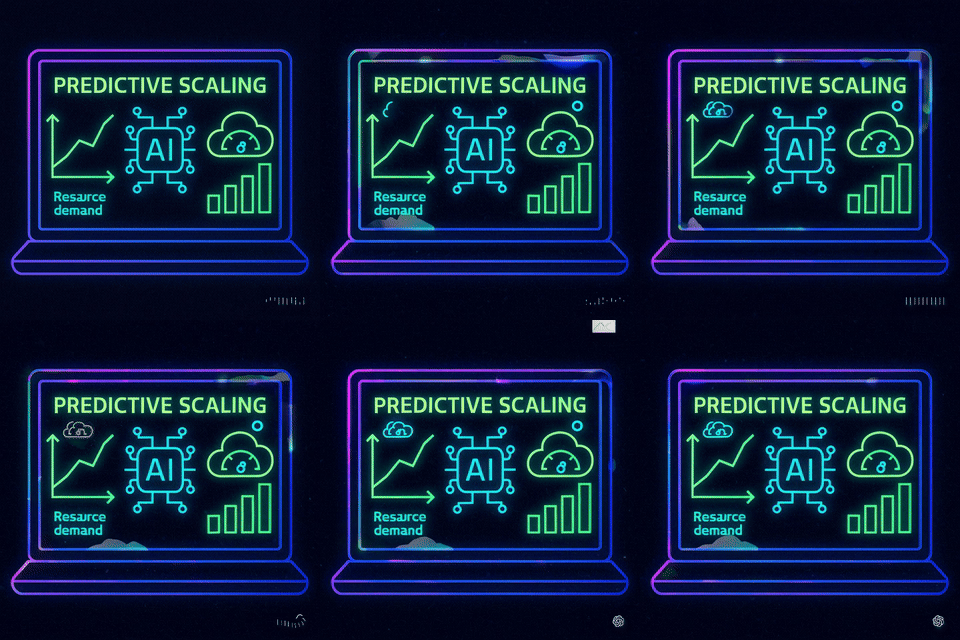
Use AI to create dynamic onboarding paths based on 2-4 signup questions (role, company size, goals). Segment users early and adapt feature intros, templates, and workflows in real-time. Track segment performance to refine paths continuously.
Progressive Profiling
Collect data incrementally—start with social logins (Google/Microsoft) or guest modes, then gather more via contextual prompts. Avoid upfront overload by pre-filling demos or auto-loading sample data to eliminate empty states.
Interactive Product Tours
Replace static videos with "learn-by-doing" walkthroughs:
- Embed clickable guides that trigger on first use
- Use hover/click prompts for feature discovery
- Support multi-step micro-tasks (e.g., "Create your first project")
- Customize per user segment and make skippable/revisitable
Quick Wins Integration
Identify 2-3 core features for immediate value (first project creation in minutes). Pre-populate templates, auto-fill examples, and chain wins to advanced features via linear "happy paths."
UX Best Practices for Activation Flows
Minimize Friction
- Offer zero-commitment trials/freemium starts before payments
- Hide non-essential features; focus on one core value prop per session
- Use linear flows rather than complex dashboards
Progress and Gamification
- Visual trackers ("2 of 5 steps complete")
- Milestone celebrations (animations, "Great job!" messages)
- Empty-state guides showing what's possible
- Connect wins to broader goals for momentum
Contextual Help
- In-app tooltips appearing on first interaction
- Action-triggered tips ("Try filtering your data")
- Role-based help centers
- For mobile: thumb-friendly buttons, progressive disclosure, minimal typing
Practice Implementation Comparison
| Practice |
Tech Needs |
UX Impact |
Best For |
| AI Personalization |
ML models for segmentation |
Tailored paths reduce churn |
Diverse user bases |
| Interactive Tours |
In-app scripting (JS overlays) |
Higher engagement via doing |
Feature-heavy products |
| Quick Wins |
Templates/presets API |
Fast activation |
Freemium SaaS |
| Progress Tracking |
State management + UI feedback |
Boosts motivation |
Long flows |
Time-to-Value Optimization
Aim for "Aha!" moments in first session via sample data and tailored quick wins. Test paths for completion rates and retention correlation. Map your flow by auditing steps for necessity, then A/B test personalized variants against baselines to optimize activation (e.g., feature usage at day 7).
FAQs
How long should my onboarding tour be?
Keep it under 5 minutes or 7 steps maximum. Focus on one core workflow. Users can explore additional features later via contextual tooltips and help centers.
How many signup fields should I require?
2-4 fields maximum: email + password (or social login) + 1-2 segmentation questions. Collect additional data progressively during onboarding via contextual prompts.
How does mobile onboarding differ from web?
Mobile requires thumb-friendly tap targets, minimal typing, progressive disclosure (one feature per screen), and offline support for initial setup. Prioritize gestures over text instructions.
Building a SaaS with optimized onboarding? Propelius Technologies delivers user-centric UX design and technical implementation in 30-day MVP sprints.