API-First MVP Architecture: Build Scalable Startups in 2026
Mar 16, 2026
9 min read
TABLE OF CONTENTS
Return Back
Why API-First Changes Everything
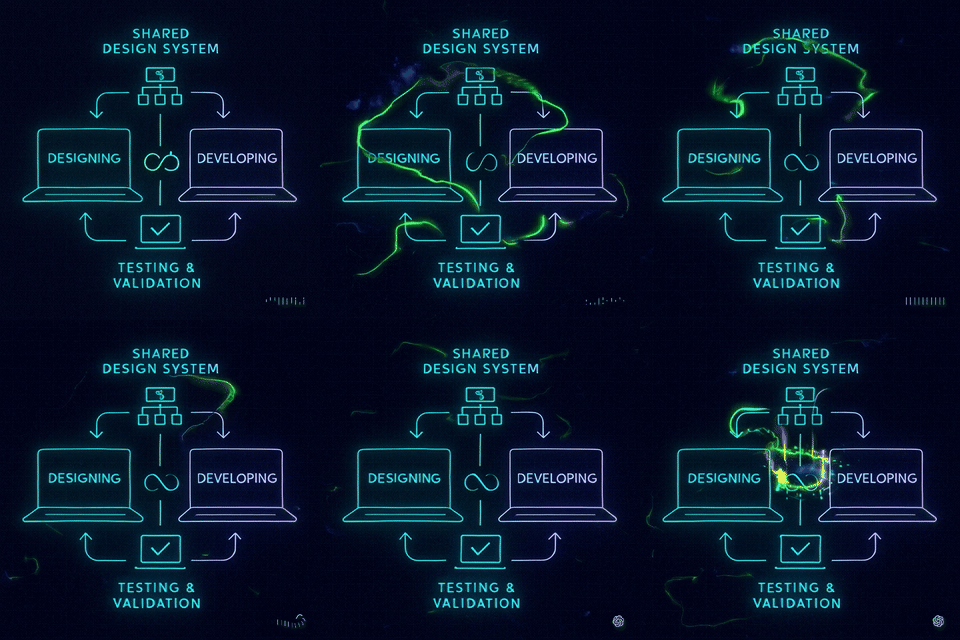
When building an MVP in 2026, the traditional monolithic approach—where frontend and backend are tightly coupled—creates technical debt before you even validate product-market fit. API-first architecture flips this: you design and build your API contracts before implementing the UI, treating the API as the product's foundation rather than an afterthought.
This isn't just a technical preference. API-first MVPs let you:
Iterate faster: Change the UI without touching backend logic
Scale modularly: Add mobile apps, chatbots, or third-party integrations without rewrites
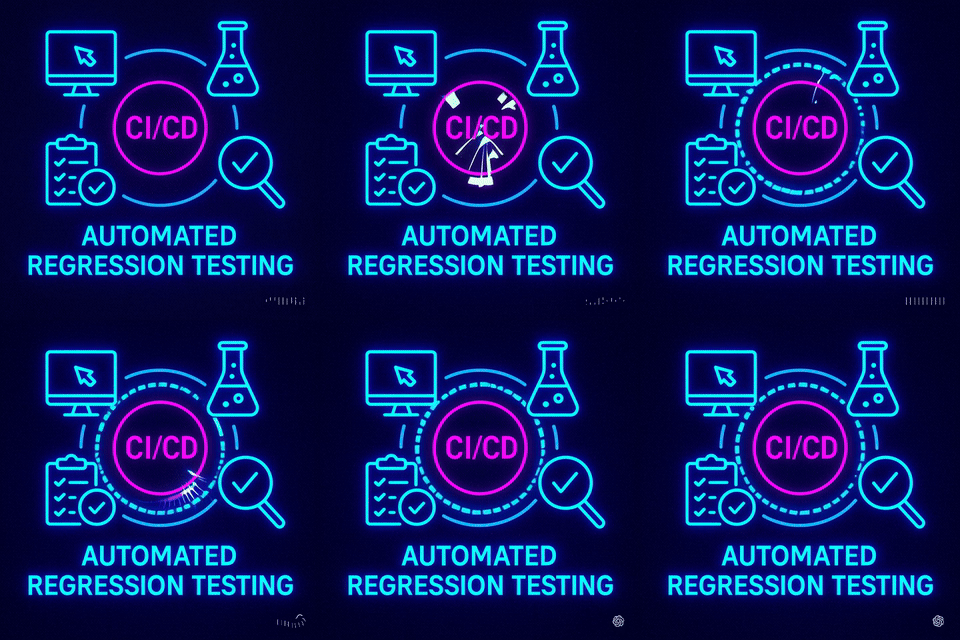
Test independently: Validate API endpoints with automated tests before building the frontend
Attract technical talent: Developers prefer working with well-documented APIs
In this guide, we'll cover the practical steps to build an API-first MVP, compare architecture patterns (REST vs GraphQL vs tRPC), and show real code examples used by Propelius Technologies in production.
The Core Principles of API-First Design
Contract-First Development
Start with the API specification—using OpenAPI (Swagger), GraphQL schema, or tRPC routers—before writing implementation code. This forces you to think through data models, error handling, and authentication early.
Versioning from Day One
Even in an MVP, include versioning in your API design (/api/v1/users). Breaking changes will happen; versioning prevents breaking existing clients during iterations.
Documentation as Code
Tools like Swagger UI (for REST) or GraphQL Playground auto-generate interactive docs from your API code. Non-technical teammates can test endpoints without Postman.
Stateless Authentication
Use JWT tokens or OAuth2 rather than session cookies. This decouples the API from the web frontend, making it reusable for mobile apps or third-party integrations.
Choosing Your API Pattern: REST vs GraphQL vs tRPC
Our recommendation for 2026 MVPs: If your frontend is Next.js + TypeScript and you don't need public API access, go with tRPC. You get end-to-end type safety, zero code generation, and faster iteration. For everything else, start with REST and migrate to GraphQL only if you face over-fetching/under-fetching issues.
Code Example: tRPC API-First MVP
Here's a minimal tRPC setup for a task management MVP. Notice how the API contract (router) is defined first, then consumed by the frontend with full TypeScript inference.
// app/page.tsx (Next.js frontend)
import { trpc } from '@/utils/trpc';
export default function TaskList() {
// Fully typed query — no manual type definitions!
const { data: tasks, isLoading } = trpc.tasks.useQuery({ status: 'pending' });
const createTask = trpc.createTask.useMutation();
if (isLoading) return
Loading...
;
return (
Tasks
{tasks?.map((task) => (
{task.title}
))}
);
}
This 50-line example demonstrates the power of API-first: the frontend gets autocomplete for endpoints, input validation happens at runtime via Zod, and you can add a mobile app by importing the same AppRouter type.
Modular Scaling: Adding Mobile and Third-Party Integrations
Once your MVP gains traction, API-first architecture makes expansion trivial:
Mobile app: Your React Native or Flutter app calls the same API endpoints. No backend changes needed.
Webhooks: Third-party services (Stripe, Twilio, Zapier) can trigger API mutations without accessing your database.
Admin dashboards: Internal tools can use the same API with different authentication scopes.
Example: A SaaS MVP built with API-first architecture added a WhatsApp chatbot in 3 days by connecting the existing /api/v1/messages endpoint to Twilio's webhook. No schema changes, no new database tables—just a new consumer.
Common Pitfalls and How to Avoid Them
Pitfall 1: Over-Engineering the API
Don't build 20 endpoints for a 3-page MVP. Start with CRUD operations for your core entities (users, products, orders). Add complexity only when user feedback demands it.
Pitfall 2: Skipping Error Handling
Return consistent error shapes with HTTP status codes. Use { "error": { "code": "VALIDATION_ERROR", "message": "...", "field": "email" } } rather than raw database errors.
Pitfall 3: No Rate Limiting
Even MVPs attract bots. Add basic rate limiting (10 requests/second per IP) using libraries like express-rate-limit or Cloudflare.
FAQs
FAQs
Is API-first slower to build than a monolith for MVPs?
Initially, yes—by 10-20%. But you save weeks during iterations. Changing the UI in a monolith often requires backend changes; API-first decouples this. By iteration 3, you're ahead.
Should I use API-first for B2C MVPs or just B2B?
Both. B2C apps often need mobile versions within 6 months. API-first lets you reuse 90% of backend logic. B2B benefits from easier integrations with client systems.
What database works best with API-first MVPs?
PostgreSQL for relational data (users, transactions), MongoDB for document-heavy apps (CMS, analytics). Use Prisma or Drizzle ORM for type-safe database queries that match your API types.
Can I do API-first without TypeScript?
Yes, but you lose the biggest advantage—type safety across frontend/backend. Use OpenAPI generators (like openapi-typescript) to get types from REST APIs if you must use JavaScript.
Need an expert team to provide digital solutions for your business?