Implementing Feature Flags for SaaS Applications: Complete Guide
Feb 23, 2026
8 min read
Implementing Feature Flags for SaaS Applications: Complete Guide
Feature flags (also called feature toggles) are one of the most powerful tools in a SaaS engineering team's arsenal. They let you deploy code to production without immediately exposing it to users, roll out features gradually to specific user segments, run A/B tests, and kill problematic features instantly without redeploying.
But feature flags introduce complexity. Poor implementation leads to technical debt, performance issues, and confusion. In this guide, we'll cover how to implement feature flags properly — from architecture decisions to operational best practices.
Why Feature Flags Matter for SaaS
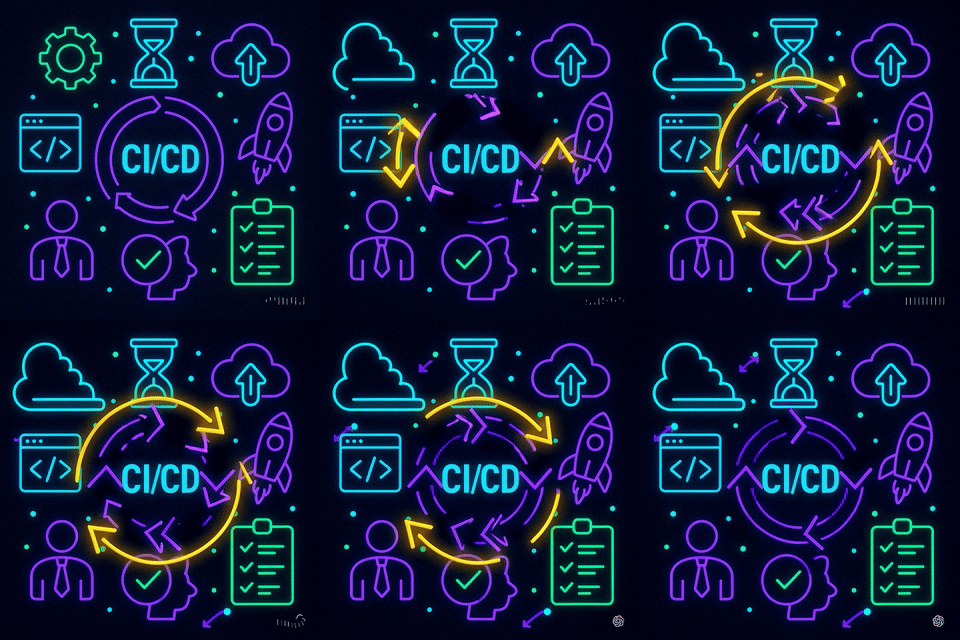
In traditional deployment, code merge = production release. If a feature breaks, you must revert the commit, redeploy, and wait for CI/CD to complete. With feature flags, you simply flip a switch and the feature disappears — instantly.
Key use cases:
Progressive rollouts: Release to 5% of users, monitor metrics, then expand to 25%, 50%, 100%
Kill switches: Disable a broken feature immediately without redeploying
A/B testing: Show variant A to 50% of users, variant B to the other 50%, measure conversion
Beta features: Let specific customers try new features before general availability
Canary releases: Deploy to internal users first, then external customers
Operational toggles: Temporarily disable expensive features during traffic spikes
Feature Flag Architecture
At its core, a feature flag is a conditional statement:
But production-grade feature flag systems need more:
Targeting rules: Enable for specific users, organizations, countries, or user segments
Gradual rollouts: Percentage-based rollouts with consistent bucketing
Scheduling: Automatically enable/disable flags at specific times
Analytics integration: Track which users see which variants
Low latency: Flag evaluation must be fast (< 1ms) to avoid slowing requests
Photo by Firos nv on Pexels
Build vs Buy: Choosing a Feature Flag Solution
Commercial Solutions
Solution
Best For
Pricing
LaunchDarkly
Enterprise teams, complex targeting
Starts at $10/seat/month
Split.io
A/B testing focus
Starts at $33/month
Flagsmith
Open-source option, self-hostable
Free tier, then $45/month
Unleash
Developer-first, self-hostable
Open-source or hosted
When to buy: If you need advanced targeting, A/B testing analytics, compliance features (audit logs, RBAC), or want to move fast. Commercial solutions provide SDKs, dashboards, and support out of the box.
Building In-House
When to build: If your needs are simple (basic on/off toggles), you want full control, or you're cost-sensitive (early-stage startup).
A minimal feature flag system needs:
Storage: Database table or Redis for flag definitions
Evaluation logic: Function that checks if a flag is enabled for a user
Admin UI: Dashboard to create and manage flags
SDK/client: Library that fetches flags and evaluates them
Implementation time: 2-4 weeks for a basic system. However, you'll spend ongoing time maintaining it and adding features like percentage rollouts, scheduling, and audit logs.
Consistency: Same user always gets the same result for a flag
Gradual expansion: Increasing percentage from 10% → 50% includes the original 10%
No flip-flopping: Users don't randomly switch between enabled/disabled
Performance Optimization
Feature flag evaluation happens on every request. Poor implementation can add 50-100ms latency. Here's how to keep it fast:
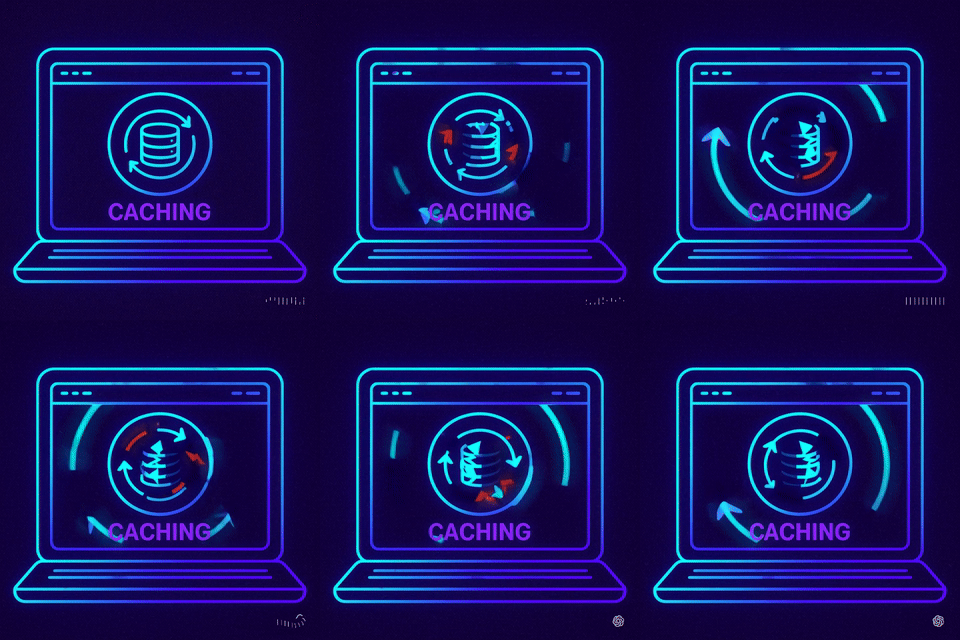
Caching Strategy
In-memory cache (local) Cache flag definitions in application memory. Refresh every 30-60 seconds. Latency: < 1ms
Shared cache (Redis) Cache in Redis for multi-instance deployments. Refresh every 5-10 seconds. Latency: 1-5ms
Database (fallback) Only query the database if caches miss. Latency: 10-50ms
class FeatureFlagService {
constructor() {
this.localCache = new Map();
this.lastRefresh = null;
}
async isEnabled(flagName, user) {
// Refresh cache if stale (> 60 seconds)
if (!this.lastRefresh || Date.now() - this.lastRefresh > 60000) {
await this.refreshCache();
}
const flag = this.localCache.get(flagName);
if (!flag) return false;
return this.evaluateRules(flag, user);
}
}
Batch Evaluation
Instead of checking flags individually, evaluate all flags for a user once per request:
// Bad: Multiple flag checks
if (flags.isEnabled('feature-a')) { ... }
if (flags.isEnabled('feature-b')) { ... }
if (flags.isEnabled('feature-c')) { ... }
// Good: Batch evaluation
const userFlags = await flags.getAllForUser(user);
if (userFlags['feature-a']) { ... }
if (userFlags['feature-b']) { ... }
Flag Lifecycle Management
Feature flags are meant to be temporary. Permanent flags create technical debt — the codebase becomes littered with conditionals that are always true or always false.
Flag Types and Lifespans
Type
Lifespan
Example
Release flags
2-4 weeks
Gradual rollout of new feature
Experiment flags
1-3 months
A/B test for checkout flow
Operational flags
Permanent
Kill switch for expensive API
Permission flags
Permanent
Enterprise-only features
Cleanup Process
Set expiration dates When creating a flag, set an expected removal date.
Monitor usage Track which flags are actually being checked in code.
Scheduled reviews Monthly review of all flags — which can be removed?
Deprecation workflow Mark flag as deprecated → Remove from code → Delete flag definition
Automation tip: Use static analysis to find unused flags in your codebase automatically.
Common Pitfalls to Avoid
Too many flags: More than 50 active flags indicates poor cleanup discipline
Nested flags: Flags inside flags create exponential complexity — avoid at all costs
Database flags: Storing flag state per user in database doesn't scale — use targeting rules instead
No monitoring: Track flag evaluation failures, cache hit rates, and latency
Ignoring rollback: Every flag should have a documented rollback process
Testing with Feature Flags
Feature flags complicate testing — you must test both states of every flag. Strategies:
Unit Tests
describe('Dashboard', () => {
it('shows new dashboard when flag enabled', () => {
mockFlags({ 'new-dashboard': true });
render();
expect(screen.getByText('Welcome to v2')).toBeInTheDocument();
});
it('shows old dashboard when flag disabled', () => {
mockFlags({ 'new-dashboard': false });
render();
expect(screen.getByText('Welcome to v1')).toBeInTheDocument();
});
});
Integration Tests
Test the most important flag combinations:
All flags off (baseline)
All flags on (future state)
Critical flags on (most common production state)
Don't test every permutation — that's exponential. Focus on realistic combinations.
FAQs
How many feature flags is too many?
More than 50 active flags suggests poor cleanup. Aim to remove flags within 2-4 weeks of full rollout. Only operational and permission flags should be permanent. Use automated reminders to prompt flag removal after rollout completion.
Should feature flags be stored in config files or a database?
Use a database (or Redis) for flags that need to change dynamically without redeployment. Use config files only for environment-specific settings (like API keys). Database storage allows non-engineers to toggle flags via admin UI.
How do I prevent feature flag sprawl?
Set expiration dates when creating flags. Implement automated alerts when flags exceed their expected lifespan. Require approval for permanent flags. Include flag cleanup in your definition of done for feature releases.
Can feature flags cause race conditions?
Yes, if flag state changes mid-request. Cache flags per request to ensure consistency. If a user starts a checkout with the old flow, complete the entire flow with the old code — don't switch mid-transaction.
How do I handle database migrations with feature flags?
Use backward-compatible migrations. First deploy the migration (both old and new code work). Then enable the flag. Finally, remove old code after 100% rollout. This allows safe rollback at any point.
Need an expert team to provide digital solutions for your business?